How Aluminum Window Drainage Systems Work: Preventing Water Leaks in Modern Windows
Introduction
Many people believe that a high-quality aluminum window should completely block rainwater. Surprisingly, modern window engineering follows a different principle.
Instead of trying to stop every drop of water, premium aluminum windows are designed to collect, control, and discharge rainwater safely. An advanced aluminum window drainage system guides water through specially engineered drainage chambers and channels before releasing it outside the building.
As a result, modern drainage systems greatly improve water tightness, reduce leakage risks, and protect the entire window structure during heavy rain and strong winds.
In this guide, we’ll explain how aluminum window drainage systems work, the different drainage designs used today, and why they play such an important role in window performance.
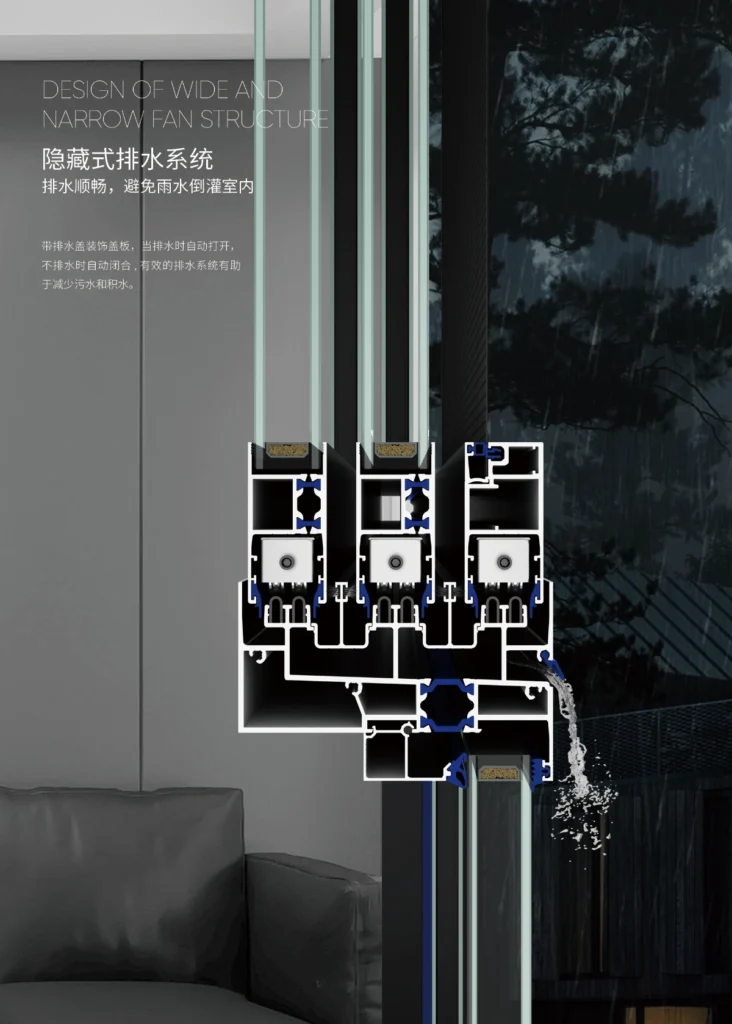
Why Every Aluminum Window Needs a Drainage System
Even the highest-quality weather seals cannot completely block wind-driven rain.
During storms, a small amount of water may enter the outer chamber of the window frame. This is completely normal.
Instead of trapping water inside, modern aluminum windows are engineered to direct it back outdoors through an integrated drainage system.
Without effective drainage, water could:
- Damage weather seals
- Cause corrosion over time
- Create mold around the frame
- Leak into interior finishes
- Reduce the window’s service life
Therefore, a properly designed drainage system is just as important as the glass or frame itself.
How Aluminum Window Drainage Systems Work
The drainage process happens in several controlled stages.
Step 1 – Rainwater Enters the Outer Chamber
During heavy rain, some water passes the first weather seal and enters the outer drainage chamber.
This chamber acts as the first collection area.
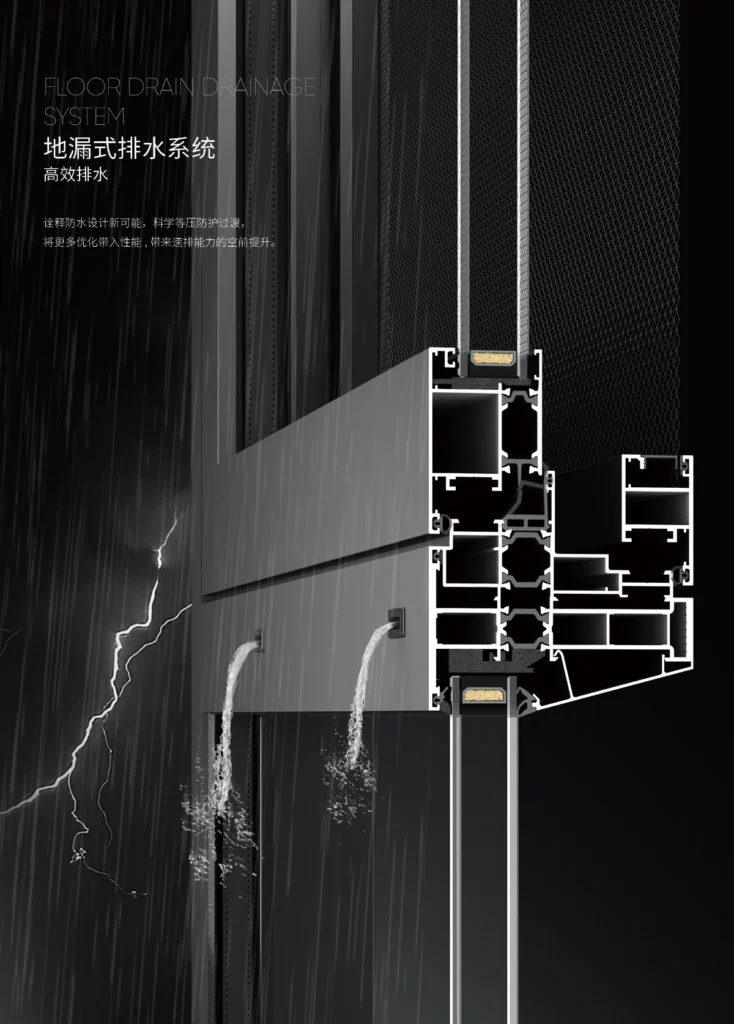
Step 2 – Internal Drainage Channels Collect Water
Instead of allowing water to spread throughout the frame, specially designed drainage channels guide it toward designated drainage outlets.
These channels are carefully integrated into the aluminum profile.
Because of this design, water remains separated from the interior living space.
Step 3 – Gravity Moves the Water
Most premium aluminum windows use gravity-assisted drainage.
The drainage channel is slightly inclined so water naturally flows toward the outlet.
Unlike older window designs, modern systems require no moving parts.
Step 4 – Water Exits Through Concealed Drainage Outlets
Finally, water leaves the frame through hidden drainage outlets or protected weep holes.
This completes the drainage cycle while keeping the inside of the building dry.
Hidden Drainage Systems: Cleaner Appearance, Better Protection
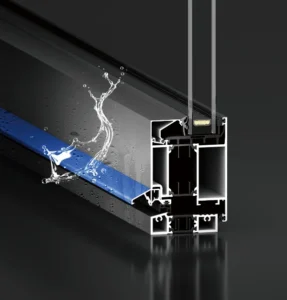
Many modern aluminum windows now use hidden drainage systems instead of traditional exposed weep holes.
Compared with conventional drainage openings, concealed drainage offers several advantages.
Benefits include:
- Cleaner exterior appearance
- Better architectural aesthetics
- Reduced dust accumulation
- Less chance of insects entering
- Improved long-term durability
Hidden drainage has become a common feature in premium residential and commercial aluminum window systems.
Stepped Drainage Design Improves Water Flow
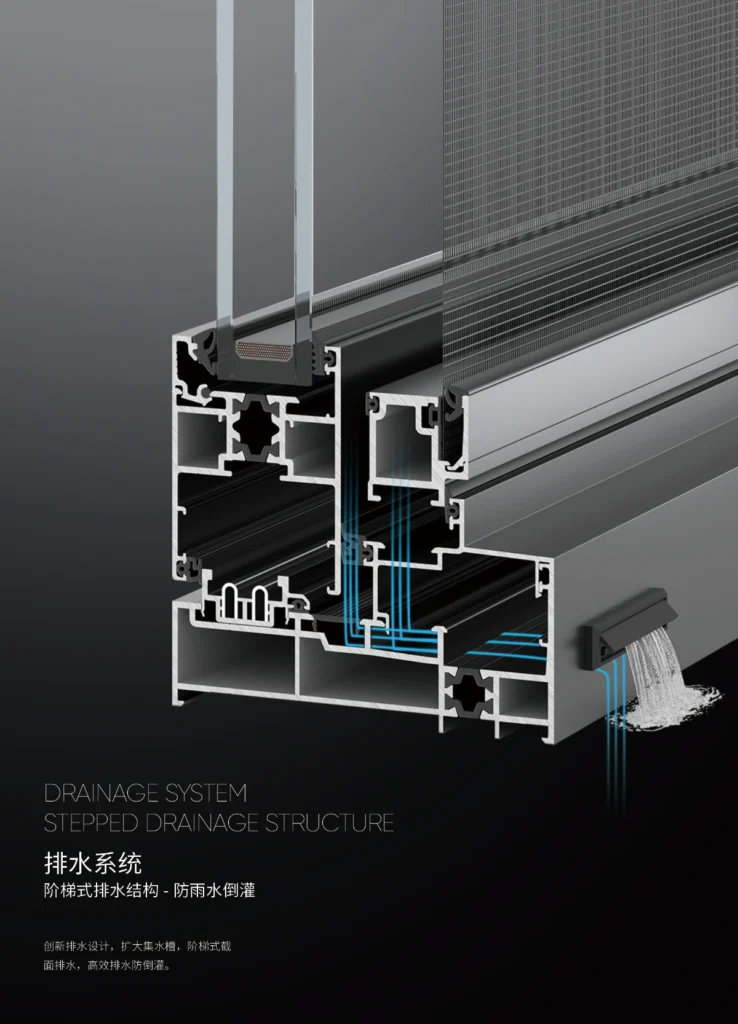
Some aluminum windows use a stepped drainage system.
Instead of allowing water to collect in one chamber, the system directs rainwater through multiple levels before discharging it outdoors.
This design helps:
- Speed up drainage
- Reduce standing water
- Improve waterproof performance
- Minimize overflow during heavy storms
As a result, stepped drainage performs particularly well in regions with frequent rainfall.
Pressure-Equalized Drainage for Extreme Weather
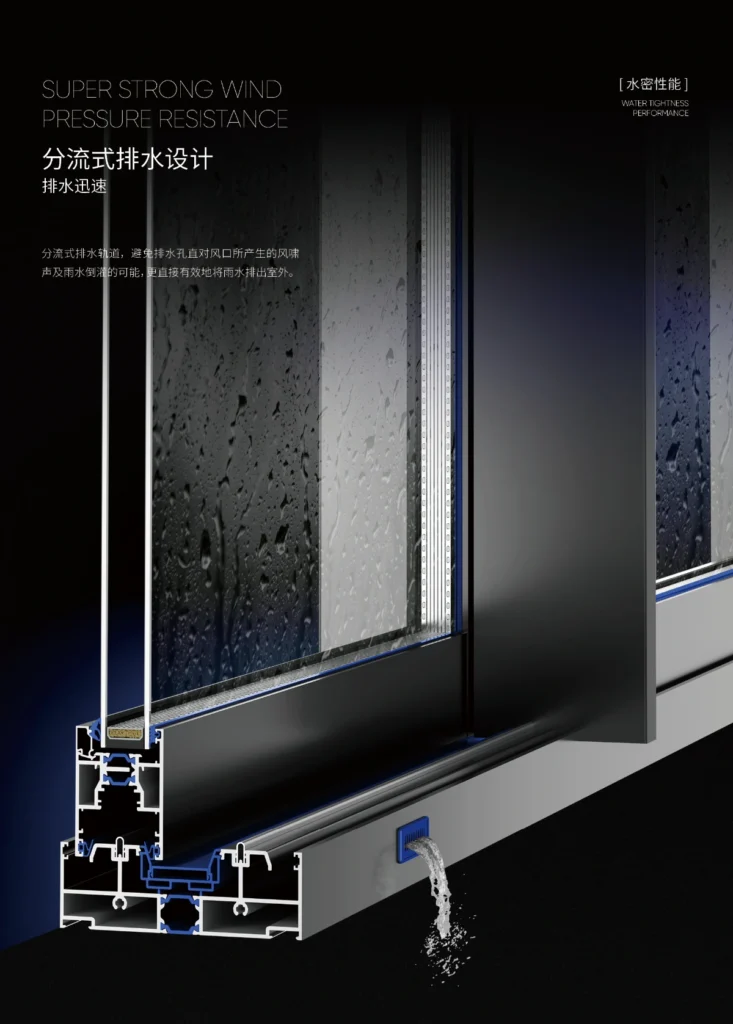
Premium aluminum windows often incorporate pressure-equalized drainage.
Strong winds create pressure differences around a building.
Without pressure equalization, rainwater can be forced deeper into the frame.
A pressure-equalized drainage chamber balances air pressure and allows water to drain more efficiently.
Consequently, the window performs better during driving rain and severe weather conditions.
Multi-Channel Drainage Provides Extra Protection
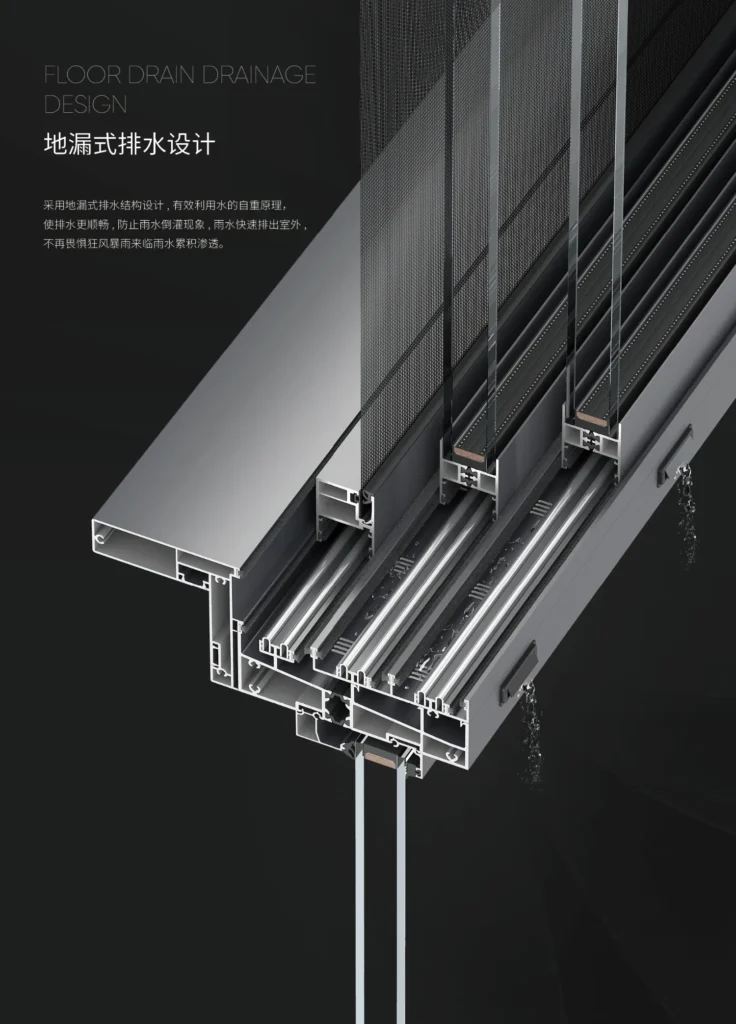
High-performance window systems often include multiple drainage paths.
Instead of relying on a single outlet, water flows through several drainage channels.
This design offers:
- Primary drainage
- Secondary backup drainage
- Faster discharge
- Reduced blockage risk
If one outlet becomes partially blocked, the remaining channels continue to remove water.
Common Reasons Aluminum Windows Leak
Many people blame poor glass or weak sealant.
However, drainage problems are often the real cause.
Common issues include:
Blocked drainage channels
Dust, insects, or construction debris can prevent water from flowing.
Poor installation
Improper frame leveling prevents gravity drainage.
Covered drainage outlets
Exterior finishing materials sometimes block weep holes.
Low-quality profile design
Some inexpensive windows simply lack sufficient drainage capacity.
How to Choose an Aluminum Window with Better Drainage
When comparing suppliers, don’t focus only on frame thickness or glass.
Instead, ask about the drainage system.
Questions worth asking include:
- Does the window use hidden drainage?
- How many drainage channels are built into the frame?
- Is pressure equalization included?
- Are drainage outlets protected from insects?
- Has the system passed water tightness testing?
- Can the drainage channels be cleaned easily?
A professional manufacturer should answer these questions clearly, like us.
Frequently Asked Questions
Is it normal for water to enter an aluminum window?
Yes.
Modern aluminum windows allow limited water to enter the outer drainage chamber before safely directing it outside.
Do hidden drainage systems perform better?
In most premium window systems, yes.
They combine excellent waterproof performance with a cleaner appearance.
Can blocked drainage holes cause leaks?
Absolutely.
Blocked drainage channels prevent water from leaving the frame, increasing the risk of leakage.
Regular maintenance helps maintain proper drainage performance.
Are drainage systems important in coastal areas?
Yes.
Effective drainage removes rainwater quickly while reducing moisture accumulation, which helps improve durability in humid environments.
Conclusion
A modern aluminum window does much more than block rain.
It manages water intelligently through carefully engineered drainage chambers, concealed outlets, and multiple drainage paths.
Whether the system uses hidden drainage, stepped drainage, or pressure-equalized technology, the goal remains the same: move water out before it reaches your home.
When selecting aluminum windows, don’t judge quality by appearance alone. An advanced drainage system is one of the most important features affecting long-term waterproof performance, durability, and overall reliability.
At House Essential, we supply customized aluminum window systems with advanced drainage solutions designed for residential and commercial projects worldwide. Contact us to learn more about our factory-direct window solutions.