Understanding Insulated Glass Windows: Why Modern Windows Use Multiple Glass Layers
Modern energy-efficient homes no longer use single-pane windows. Instead, most buildings today use insulated glass windows with multiple layers of glass designed to reduce heat transfer, improve sound insulation, and increase indoor comfort.
These glass systems are known as Insulated Glass Units (IGU) and are widely used in modern aluminum window systems, sliding doors, and curtain walls across the United States and Europe.
Below is a real example showing how different window glass structures are arranged.
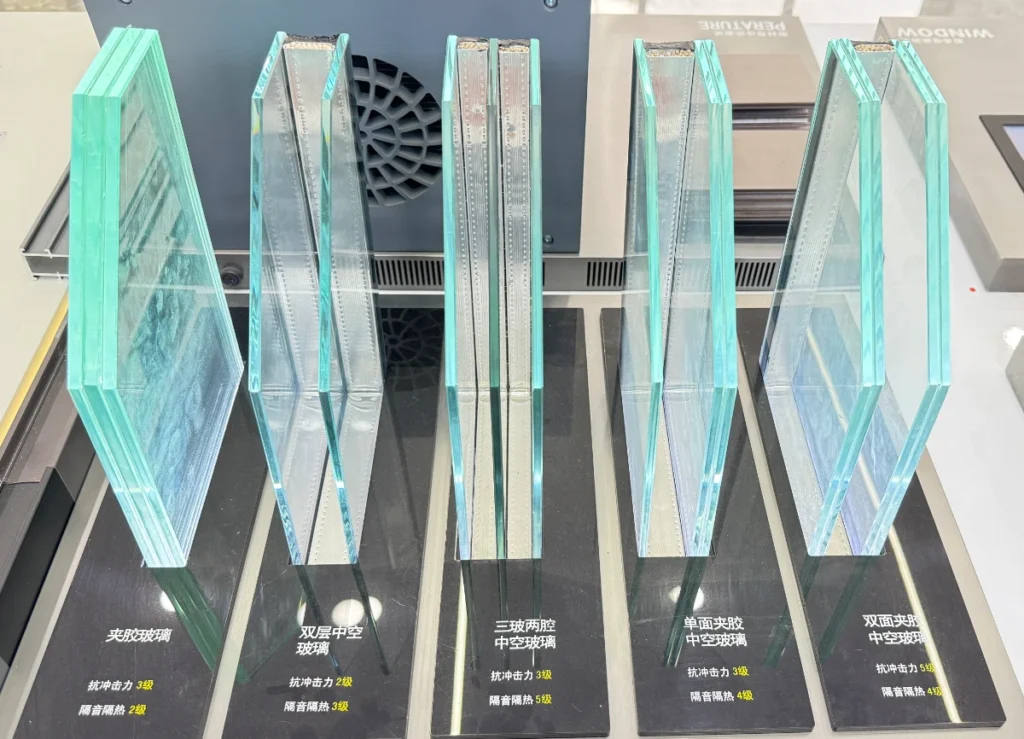
As shown in the image above, modern window glass can be configured in several ways, including:
-
Laminated glass
-
Double insulated glass
-
Triple insulated glass
-
Laminated insulated glass combinations
Each configuration provides different levels of thermal insulation, sound reduction, and safety performance.
Why Multi-Layer Window Glass Reduces Heat Transfer
Heat moves through windows in three ways:
1. Conduction
Heat travels directly through the glass material.
2. Convection
Air movement near the glass surface transfers heat.
3. Radiation
Infrared heat energy passes through the glass.
Single-pane windows allow heat to move through very easily, which leads to:
-
Higher energy consumption
-
Poor temperature stability
-
Condensation problems
-
Weak sound insulation
By adding multiple glass layers and sealed air spaces, insulated glass windows dramatically slow down heat transfer.
Laminated Glass (Safety Glass)
Structure
Glass + PVB interlayer + Glass
Laminated glass is made by bonding two panes of glass together with a PVB (polyvinyl butyral) interlayer.
Advantages
-
High safety performance
-
Glass stays together when broken
-
Improved sound insulation
-
Better UV protection
Laminated glass is commonly used for:
-
Large windows
-
Balcony doors
-
High-rise buildings
-
Areas requiring safety glazing
Double Glazing Windows
Structure
Glass | Air or Argon Gap | Glass
Double glazing is the most common insulated glass configuration used worldwide.
The sealed gap between the glass panes acts as an insulating barrier that slows down heat transfer.
Benefits
-
Improved thermal insulation
-
Reduced energy consumption
-
Better sound insulation
-
Less condensation
Most modern homes in the US and Europe use double-glazed windows with Low-E coatings.
Triple Glazing Windows
Structure
Glass | Air Gap | Glass | Air Gap | Glass
Triple glazing adds a third glass pane, creating two insulating cavities.
Advantages
-
Excellent thermal insulation
-
Lower U-values
-
Strong noise reduction
-
Better winter comfort
Triple glazing is often used in:
-
Passive houses
-
Cold climate regions
-
High-performance buildings
Laminated Insulated Glass
Some window systems combine laminated glass with insulated glazing technology.
Example structure:
Laminated glass | Air gap | Glass
This design provides:
-
Better safety performance
-
Improved sound insulation
-
Strong thermal performance
These glass systems are popular in urban areas with high noise levels.
Double Laminated Insulated Glass
Structure
Laminated glass | Air gap | Laminated glass
This is a high-end glass configuration used in premium window systems.
Advantages
-
High impact resistance
-
Excellent acoustic insulation
-
Enhanced security
-
Good energy efficiency
These systems are commonly installed in:
-
Luxury homes
-
Hotels
-
Buildings near airports or highways
The Role of Low-E Glass Coatings
Modern insulated glass units often include Low-E (Low Emissivity) coatings.
Low-E coatings reflect infrared heat while allowing natural daylight to pass through.
This helps:
-
Keep indoor heat inside during winter
-
Reduce solar heat gain in summer
-
Improve window energy efficiency
When combined with double or triple glazing, Low-E glass significantly improves insulation performance.
Window Glass Performance Comparison
| Glass Type | Typical U-Value |
|---|---|
| Single glass | ~5.5 W/m²K |
| Double glazing | ~2.6 W/m²K |
| Double glazing + Low-E | ~1.6 W/m²K |
| Triple glazing | ~0.8 W/m²K |
Lower U-values mean better thermal insulation and energy efficiency.
Why Aluminum Windows Pair Well with Insulated Glass
Modern aluminum window systems are designed to support high-performance insulated glass units.
When combined with thermal break aluminum frames, these windows provide:
-
Excellent durability
-
Slim modern appearance
-
High structural strength
-
Strong energy efficiency performance
This makes aluminum windows a popular choice for modern residential and commercial buildings worldwide.
Conclusion
Insulated glass technology has greatly improved the performance of modern windows. By combining multiple glass layers, sealed air cavities, laminated safety glass, and Low-E coatings, today’s windows provide superior thermal insulation, sound reduction, and safety.
Whether using double glazing, triple glazing, or laminated insulated glass, choosing the right window glass system can significantly improve comfort, reduce energy costs, and enhance the overall performance of your home.
Frequently Asked Questions About Insulated Glass Windows
What is insulated glass in windows?
Insulated glass, also called an insulated glass unit (IGU), consists of two or more glass panes separated by a sealed air or gas-filled space. This design reduces heat transfer and improves energy efficiency.
Is triple glazing better than double glazing?
Triple glazing provides better thermal insulation and lower U-values than double glazing. However, double glazing with Low-E coating is often sufficient for most homes in moderate climates.
What gas is used between insulated glass panes?
Most insulated glass windows use argon gas, which provides better insulation than normal air. Some high-performance windows use krypton gas for even better thermal performance.
Does laminated glass reduce noise?
Yes. Laminated glass contains a special interlayer that helps absorb sound vibrations, making it effective for noise reduction in busy urban environments.
How long do insulated glass windows last?
High-quality insulated glass units typically last 20–30 years if properly manufactured and installed.
Aluminum vs uPVC vs Wooden Windows – Complete Comparison Guide