Aluminum windows are popular for their durability, modern appearance, and low maintenance requirements. However, even high-quality windows can develop water leakage problems under certain conditions.
If you notice aluminum windows leaking during heavy rain, the problem may involve more than the window frame itself. Poor installation, damaged seals, blocked drainage channels, and incorrect window design can all allow water to enter your home.
Fortunately, many window leakage problems have identifiable causes and practical solutions.
In this guide, we’ll explore seven common reasons aluminum windows leak, explain how to identify the source, and discuss how proper window design can help prevent future water damage.
1. Why Are Aluminum Windows Leaking?
Before fixing a leaking window, it’s important to understand how water enters the window system.
Modern aluminum windows use several components to manage rainwater:
- Window frames: Provide structural support and accommodate drainage channels.
- Weather seals: Reduce water and air infiltration around opening sections.
- Glazing gaskets: Help seal the connection between glass and aluminum profiles.
- Drainage channels: Collect and direct water toward exterior outlets.
- Sealants and flashing: Protect the connection between the window and surrounding wall.
Together, these components form a water-management system.
However, if one component fails, water may accumulate or enter areas that should remain dry.
Furthermore, heavy rain combined with strong wind can create additional pressure against the window.
As a result, water may penetrate weak points that remain watertight during ordinary rainfall.
2. Seven Common Causes of Aluminum Windows Leaking
2.1 Blocked Window Drainage Holes
Blocked drainage channels are a common cause of aluminum window water leakage.
Many aluminum window systems allow small amounts of rainwater to enter designated drainage chambers. The system then directs this water outside through drainage outlets.
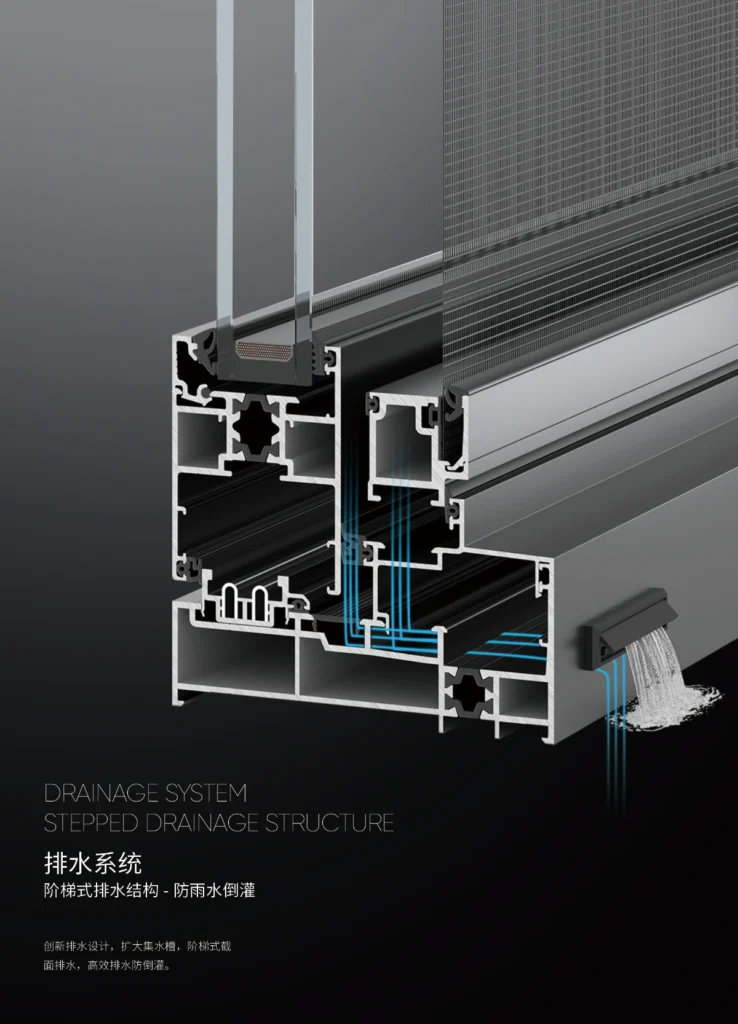
However, dust, leaves, insects, and construction debris can obstruct these passages.
When water cannot escape, it may accumulate inside the frame and eventually overflow toward the interior.
Common signs include:
- Water collecting along the bottom window track.
- Leakage appearing after prolonged rainfall.
- Standing water inside drainage chambers.
- Visible dirt around drainage outlets.
How to fix it:
First, inspect the drainage openings along the exterior side of the window frame.
Next, remove visible debris using a soft brush or suitable cleaning tool.
After cleaning, carefully test the drainage system with a small amount of water.
Make sure the water flows toward the exterior without overflowing indoors.
Avoid inserting sharp metal objects into drainage holes, as they may damage internal components.
For a more detailed explanation, read our article: How Aluminum Window Drainage Systems Work.
2.2 Damaged or Aging Weather Seals
Weather seals play an important role in keeping rainwater and air outside.
Manufacturers commonly use EPDM rubber or other suitable sealing materials around operable window sections.
Over time, however, seals may lose elasticity, become damaged, or move out of position.
Consequently, gaps can develop between the window sash and frame.
During wind-driven rain, these gaps may allow water to pass through.
Common signs include:
- Cracked or hardened rubber seals.
- Visible gaps around the window sash.
- Water entering near opening sections.
- Increased drafts around closed windows.
How to fix it:
Inspect the seals around the entire window.
If you notice damaged or displaced sections, replace them with compatible sealing profiles.
Additionally, check whether the window sash closes evenly against the frame.
Simply replacing the rubber seal may not solve the problem if the sash itself is misaligned.
2.3 Poor Window Installation
Even a well-designed aluminum window can leak when installers fail to seal the surrounding opening correctly.
In fact, water appearing around the window frame often originates from the connection between the window and the wall.
Common installation mistakes include:
- Inadequate perimeter sealing.
- Incorrect flashing installation.
- Missing or poorly detailed sill waterproofing.
- Improper window positioning.
- Gaps between the frame and surrounding structure.
For example, rainwater may enter behind exterior cladding and travel along the wall cavity before appearing near the window.
Therefore, the visible leakage point does not always indicate the actual source.
How to fix it:
Inspect the perimeter sealant and surrounding wall construction.
Look for cracks, gaps, or deteriorated waterproofing materials.
However, avoid applying additional silicone over existing joints without identifying the water-entry path.
In some cases, proper repairs require removing damaged sealant or correcting the flashing system.
For major installation defects, consult a qualified window installer or building-envelope specialist.
2.4 Incorrect Window Slope or Sill Design
Proper drainage depends on gravity.
Therefore, the window sill and drainage system must direct water toward the exterior.
If installers position the window incorrectly, water may collect in unwanted areas.
Similarly, an improperly designed sill can allow water to flow toward the interior.
Potential problems include:
- Insufficient outward slope.
- Poorly positioned drainage outlets.
- Water collecting behind the exterior sill.
- Incorrect installation of sill flashing.
How to fix it:
Check whether the window sill directs water away from the building.
Additionally, inspect the drainage outlets to ensure that they remain unobstructed.
If the problem involves incorrect installation geometry, professional adjustment or reconstruction may be necessary.
Importantly, do not attempt to correct serious drainage problems by drilling additional holes into the aluminum frame.
Doing so may damage internal drainage chambers or compromise the window’s performance.
2.5 Poor-Quality Window Hardware
Window hardware affects more than convenience and security.
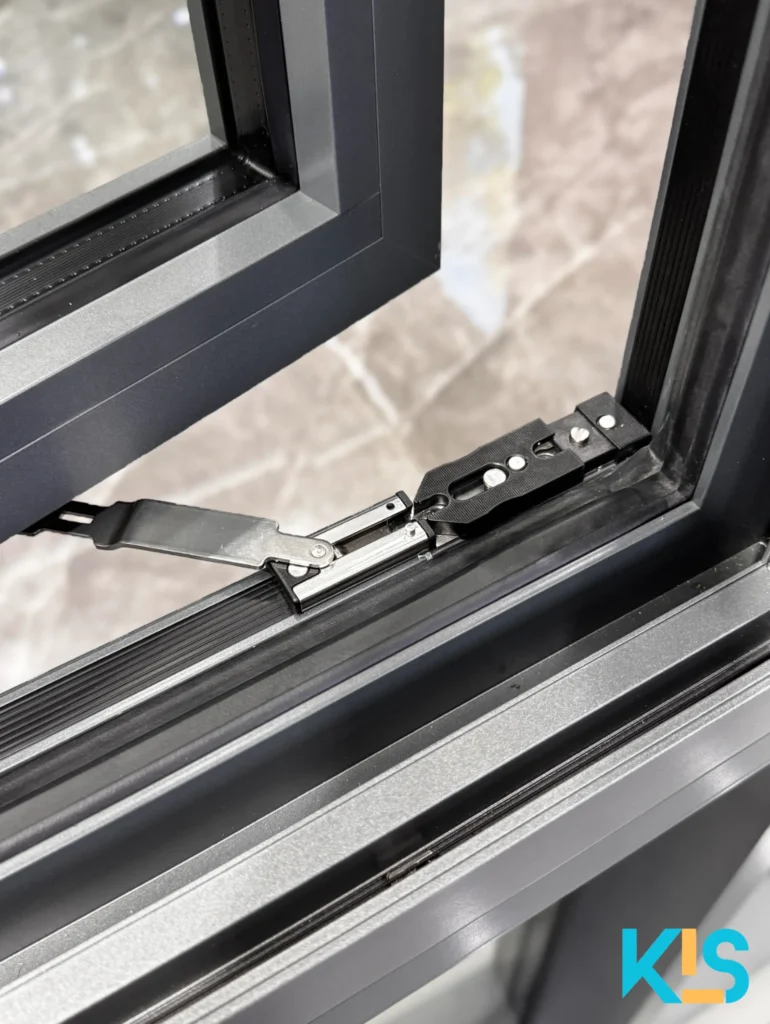
For example, a casement window relies on its locking mechanism to pull the sash firmly against the frame.
If the hardware becomes loose or misaligned, the sash may no longer close evenly.
As a result, rainwater can enter through gaps around the opening section.
Common signs include:
- Difficulty closing the window.
- Uneven gaps around the sash.
- Loose handles or hinges.
- Water entering near locking points.
How to fix it:
Check the alignment of the window sash.
Next, inspect hinges, locking points, and other moving components.
Adjust or replace damaged hardware according to the manufacturer’s instructions.
For larger or heavier windows, choose hardware that matches the sash weight and dimensions.
You can also read our article: Aluminum Window Hardware Explained: Hinges, Handles & Locks.
2.6 Poor Glazing Seals or Glass Installation
Another possible cause of aluminum windows leaking involves the connection between the glass and the window profile.
Aluminum windows commonly use glazing gaskets, glazing beads, and other components to secure and seal the glass.
However, incorrect gasket installation or incompatible glazing components may create gaps.
Under heavy rain, water may enter the glazing rebate.
A properly designed drained glazing system can manage incidental water in this area. Nevertheless, defective seals or blocked drainage paths may cause leakage.
Common signs include:
- Water appearing along the glass edges.
- Damaged glazing gaskets.
- Loose glazing beads.
- Leakage concentrated around glass corners.
How to fix it:
Inspect the glazing gaskets for damage or displacement.
If necessary, replace them with compatible materials.
Also, check whether the glazing system provides the correct compression and drainage.
Because glass installation involves safety risks, qualified technicians should handle major glazing repairs.
2.7 Inadequate Window Design for Heavy Rain and Wind
Not every aluminum window system offers the same level of water resistance.
Some systems perform adequately in sheltered residential locations but may struggle in buildings exposed to severe wind-driven rain.
For example, high-rise buildings and coastal properties often experience greater wind pressure than sheltered low-rise homes.
Therefore, window selection should consider the building’s location, height, exposure, and applicable performance requirements.
Important design features include:
- Effective drainage channels.
- Suitable weather-sealing systems.
- Proper sash compression.
- Adequate frame and sash stiffness.
- Tested water penetration resistance.
Additionally, manufacturers should select appropriate hardware, glazing, and installation details for the intended application.
A thicker aluminum profile alone does not guarantee better waterproof performance.
Instead, the complete window system must work together.
3. How to Identify Where Your Aluminum Window Is Leaking
Finding the actual source of water infiltration is essential before attempting repairs.
Start by observing where and when the leakage occurs.
| Leakage Location | Possible Cause |
|---|---|
| Bottom window track | Blocked drainage outlets or drainage defects |
| Around opening sash | Damaged seals or hardware misalignment |
| Between frame and wall | Installation or perimeter waterproofing defects |
| Around glass edges | Glazing gasket or glazing system problems |
| Window corners | Joint sealing, drainage, or installation defects |
| Only during strong wind and rain | Inadequate water resistance or installation problems |
Keep in mind that these are possible causes rather than definitive diagnoses.
Water can travel through concealed cavities before becoming visible indoors.
For this reason, professional water testing may be necessary when the source remains unclear.
4. How Modern Aluminum Window Drainage Systems Prevent Water Leaks
A well-designed aluminum window drainage system plays an important role in managing rainwater.
Instead of relying entirely on exterior seals, many modern window systems use internal drainage chambers to collect and discharge incidental water.
Different aluminum window designs may use different drainage arrangements.
4.1 Hidden Drainage Systems
Hidden drainage systems integrate drainage outlets into concealed or less visible areas of the window profile.
As a result, the exterior frame maintains a cleaner appearance.
Depending on the design, these systems may also incorporate protective outlet covers or concealed discharge paths.
However, their effectiveness depends on correct channel dimensions, outlet placement, and installation.
4.2 Stepped Drainage Systems
Stepped drainage systems use specially designed profile chambers to guide water through different levels before discharge.
This arrangement can help separate water-management areas from interior sealing zones.
Furthermore, a properly engineered stepped design may reduce the risk of water moving toward the indoor side.
Nevertheless, actual performance depends on the complete window construction.
4.3 Pressure-Equalized Drainage Systems
Some advanced aluminum window systems use pressure-equalized cavities to reduce the pressure difference that drives water through exterior openings.
By managing air pressure and drainage together, these systems can improve resistance to wind-driven rain.
However, pressure equalization requires appropriate ventilation, compartmentalization, and drainage design.
Simply adding drainage holes does not create an effective pressure-equalized system.
4.4 Why Drainage Design Matters
A reliable drainage system should:
- Collect incidental water in designated chambers.
- Direct water toward exterior outlets.
- Reduce unnecessary water accumulation.
- Maintain separation between wet and dry zones.
- Allow practical inspection and maintenance.
Most importantly, manufacturers should verify water resistance through appropriate testing rather than relying only on design claims.
5. How to Prevent Aluminum Windows From Leaking
Preventing water leakage starts with choosing the right window system.
However, installation and maintenance remain equally important.
Choose Windows With Tested Water Resistance
Before purchasing aluminum windows, ask suppliers about their water penetration resistance.
For projects in the United States, manufacturers may provide test results based on standards such as ASTM E331 or ASTM E547.
European projects commonly refer to EN 1027 testing and EN 12208 classification.
These standards help evaluate window performance under specified test conditions.
However, test results apply to particular configurations and conditions. They do not automatically guarantee that every window size or installation will perform identically.
Select Suitable Weather Seals
Choose sealing materials that match the window system and environmental conditions.
High-quality EPDM gaskets are commonly used in aluminum windows because they offer good flexibility and weather resistance.
Additionally, ensure that the seals provide continuous contact around the opening sash.
Pay Attention to Window Hardware
For operable windows, reliable hardware helps maintain consistent sealing pressure.
Therefore, select hinges and locking mechanisms that suit the sash dimensions and weight.
Regular adjustments can also help prevent sealing problems caused by misalignment.
Ensure Proper Installation
Correct installation is essential for long-term water resistance.
Installers should follow the approved window details and applicable building requirements.
In particular, pay attention to perimeter waterproofing, sill flashing, and drainage outlet positioning.
Maintain the Drainage System
Regular maintenance can help prevent drainage-related problems.
Remove dirt and debris from accessible drainage outlets.
Also, inspect weather seals and perimeter joints periodically.
Properties exposed to heavy dust, coastal conditions, or frequent storms may require more frequent inspections.
6. Are Aluminum Windows Waterproof?
Many homeowners ask whether aluminum windows are completely waterproof.
The answer requires an important distinction.
Aluminum itself does not absorb water like wood, but an aluminum window is a complete assembly with joints, seals, glazing, and drainage paths.
Therefore, the water resistance of a window depends on its overall design and installation.
A properly designed aluminum window can provide excellent resistance to rainwater penetration.
However, no window should be considered universally waterproof under unlimited pressure or every possible weather condition.
Instead, manufacturers evaluate window performance under defined testing conditions.
For demanding projects, buyers should request documented water penetration test results and confirm that the selected system meets the project’s requirements.
7. What Should Builders and Contractors Check Before Ordering Aluminum Windows?
For builders, contractors, and project developers, preventing leakage begins during product selection.
Before placing an order, consider the following factors.
Project Location
Determine whether the building faces heavy rainfall, coastal storms, or strong wind exposure.
Window Configuration
Check whether the selected window type suits the intended application.
For example, casement, awning, fixed, and sliding windows use different sealing and drainage arrangements.
Drainage Design
Review the drainage structure and ensure that water can discharge toward the exterior.
Water Resistance Testing
Request relevant test reports when the project requires documented performance.
Installation Requirements
Confirm that the supplier can provide suitable installation drawings and technical guidance.
Glazing and Hardware Compatibility
Ensure that the selected glass thickness, glazing system, and hardware match the window design.
8. Frequently Asked Questions About Aluminum Windows Leaking
Why do aluminum windows leak during heavy rain?
Heavy rain combined with wind pressure can expose weaknesses in window seals, drainage systems, or installation joints. Blocked drainage outlets and damaged weather seals are also common causes.
Can blocked drainage holes cause window leaks?
Yes. When drainage holes become blocked, water may accumulate inside designated drainage chambers. If the water level rises beyond the system’s capacity, it can overflow toward the interior.
Can silicone stop aluminum window leaks?
Silicone sealant may help repair certain perimeter sealing defects. However, it will not solve every leakage problem. Incorrectly applying silicone can also block drainage paths and make the problem worse.
Do thermal break aluminum windows prevent water leaks?
Thermal break technology primarily reduces heat transfer through aluminum profiles. Although thermal break windows may incorporate advanced sealing and drainage systems, the thermal break itself does not guarantee water resistance.
Are casement windows more waterproof than sliding windows?
Casement windows often use compression seals that can provide strong resistance to air and water infiltration. However, actual performance depends on the complete system, hardware, manufacturing quality, and installation. Well-designed sliding windows can also achieve good water resistance.
How often should aluminum window drainage holes be cleaned?
Inspect accessible drainage outlets periodically, particularly after storms or when dirt accumulates. Cleaning frequency depends on local environmental conditions.
9. Conclusion: Preventing Aluminum Window Water Leaks Starts With Proper Design
If you experience aluminum windows leaking, the first step is to identify the actual source of water infiltration.
Blocked drainage channels, damaged seals, poor installation, and unsuitable window designs can all contribute to leakage.
Fortunately, proper maintenance and professional repairs can resolve many common problems.
For new construction projects, however, prevention is the better approach.
Choosing a well-designed aluminum window system with appropriate drainage, reliable sealing components, and documented performance can significantly reduce the risk of future water damage.
Looking for Reliable Aluminum Windows for Your Project?
At House Essential, we provide customized aluminum window solutions for residential and commercial projects.
Our product options include thermal break aluminum systems, different glazing configurations, and window designs tailored to project requirements.
Whether you’re sourcing windows for a residential development, commercial building, or renovation project, we can help you explore suitable configurations based on your specifications.
Contact House Essential to discuss your aluminum window requirements and request a project quotation.