Aluminum Windows vs Wood Windows: Which Is Better for Modern Homes?
Introduction
Two of the most popular windows are aluminum windows and wood windows. Choosing the right material is one of the most important decisions when designing or renovating a home. Windows affect not only the appearance of a building but also its energy efficiency, durability, and maintenance requirements. Each material has its own advantages and limitations, and the best choice often depends on your priorities—whether you value modern aesthetics, durability, insulation, or long-term maintenance.
In this guide, we’ll compare aluminum windows vs wood windows in terms of durability, energy efficiency, design flexibility, cost, and maintenance. By the end of this article, you’ll have a clearer understanding of which window material is best suited for your home.
What Are Aluminum Windows?
Aluminum windows are window frames made from lightweight and durable aluminum profiles. They are widely used in modern architecture due to their slim frames, structural strength, and minimalist design.
One of the biggest advantages of aluminum is its strength-to-weight ratio. This allows manufacturers to create large window openings with thin frames, maximizing natural light and providing unobstructed outdoor views.
Modern aluminum windows often feature thermal break technology, which improves insulation and reduces heat transfer. This makes them suitable for energy-efficient homes when paired with double or triple glazing.
Aluminum windows are commonly used in:
-
modern homes
-
commercial buildings
-
luxury villas
-
high-rise apartments
They are especially popular in contemporary designs where clean lines and large glass panels are preferred.
What Are Wood Windows?
Wood windows are traditional window frames made from natural timber such as pine, oak, or mahogany. For centuries, wood has been a preferred material for window construction because of its natural insulation and classic appearance.
Many homeowners choose wood windows for their warm and timeless aesthetic. Wood frames can be stained or painted in various finishes, allowing them to blend well with traditional or historic architecture.
Wood also provides excellent thermal insulation. Because wood is a natural insulator, it helps reduce heat transfer between indoor and outdoor environments.
However, wood windows require regular maintenance to prevent issues such as moisture damage, warping, or rot.
Wood windows are commonly used in:
-
traditional homes
-
heritage buildings
-
luxury residences
-
rustic or classic architecture styles
Aluminum Windows vs Wood Windows: Key Differences
To understand which material is better, it helps to compare aluminum and wood windows across several important factors.
1. Durability
Durability is one of the biggest differences between aluminum and wood windows.
Aluminum windows
Aluminum is highly resistant to weather, corrosion, and environmental damage. Unlike wood, aluminum does not warp, crack, or rot over time. With proper finishing, aluminum windows can last 30 to 50 years or more.
They also perform well in harsh environments such as coastal areas or humid climates.
Wood windows
Wood windows can also last for decades, but only with proper care. Without regular sealing, painting, or staining, wood may absorb moisture and eventually develop problems such as swelling or rot.
Overall, aluminum windows generally require less maintenance to maintain long-term durability.
2. Energy Efficiency
Energy efficiency is another important factor for homeowners.
Wood windows
Wood is naturally insulating, which means it helps prevent heat from escaping during winter and keeps interiors cooler in summer. This makes wood windows naturally energy efficient.
Aluminum windows
Traditional aluminum windows conducted heat easily, which reduced insulation performance. However, modern aluminum windows now use thermal break technology, where an insulating material separates the interior and exterior aluminum profiles.
When combined with double or triple glazing, aluminum windows can achieve very competitive energy performance.
3. Design and Aesthetics
Design preferences often play a major role when choosing window materials.
Aluminum windows
Aluminum windows are known for their sleek and modern appearance. Because aluminum is strong, frames can be much thinner than wood frames. This allows for:
-
larger glass panels
-
panoramic views
-
minimalist architecture
Black aluminum windows, in particular, have become extremely popular in modern homes.
Wood windows
Wood windows offer a warm and natural look that many homeowners find appealing. They work especially well in traditional homes, cottages, and historic properties.
Wood frames can also be customized with different stains and finishes to match interior designs.
4. Maintenance Requirements
Maintenance is another major difference between these two materials.
Aluminum windows
Aluminum windows require very little maintenance. Most aluminum frames have powder-coated finishes that resist corrosion and fading. Cleaning usually involves simple wiping and occasional inspection.
Wood windows
Wood windows require more regular care. To maintain their appearance and durability, homeowners must periodically:
-
repaint or restain the frames
-
seal exposed surfaces
-
inspect for moisture damage
Without proper maintenance, wood windows can deteriorate over time.
5. Cost Difference Between Aluminum Windows and Wood Windows
Cost varies depending on window size, design, and glazing options, but general trends can be observed.
Wood windows
Wood windows are often more expensive due to material cost and craftsmanship. High-quality hardwood windows can significantly increase project budgets.
Aluminum windows
Aluminum windows tend to be more affordable, especially for large window systems. They also offer lower long-term maintenance costs.
Because of this, aluminum windows are often considered a cost-effective option for modern homes.
Which Windows Are Better for Modern Homes?
For modern architectural designs, aluminum windows are often the preferred choice.
Their slim frames, structural strength, and ability to support large glass panels make them ideal for contemporary homes that emphasize natural light and open spaces.
Aluminum windows are also highly versatile. They can be used for:
-
sliding windows
-
casement windows
-
floor-to-ceiling glass walls
-
large panoramic windows
However, wood windows still remain an excellent option for homeowners who prioritize traditional aesthetics or natural materials.
Ultimately, the best choice depends on your priorities:
-
Choose aluminum windows for durability, modern design, and low maintenance.
-
Choose wood windows for classic style and natural insulation.
Conclusion
Both aluminum and wood windows have unique strengths. Aluminum windows excel in durability, modern aesthetics, and low maintenance, while wood windows offer natural beauty and excellent insulation.
For modern homes and large glass designs, aluminum windows often provide the most practical and visually appealing solution. However, wood windows remain a timeless choice for traditional architecture.
When selecting windows for your home, consider factors such as climate, maintenance expectations, design preferences, and budget. Choosing the right material can improve both the performance and appearance of your home for many years to come.
FAQ
Are aluminum windows better than wood windows?
Aluminum windows are generally more durable and require less maintenance than wood windows. They are also better suited for modern architectural designs.
Do aluminum windows last longer than wood windows?
Yes. Aluminum windows can last 30–50 years or longer with minimal maintenance, while wood windows require regular upkeep to achieve a similar lifespan.
Are wood windows more energy efficient?
Wood is a natural insulator, which gives wood windows good thermal performance. However, modern aluminum windows with thermal breaks can achieve similar energy efficiency.
Which windows are cheaper: aluminum or wood?
In most cases, aluminum windows are more affordable than wood windows, especially for large or custom window systems.
Pros and Cons Summary
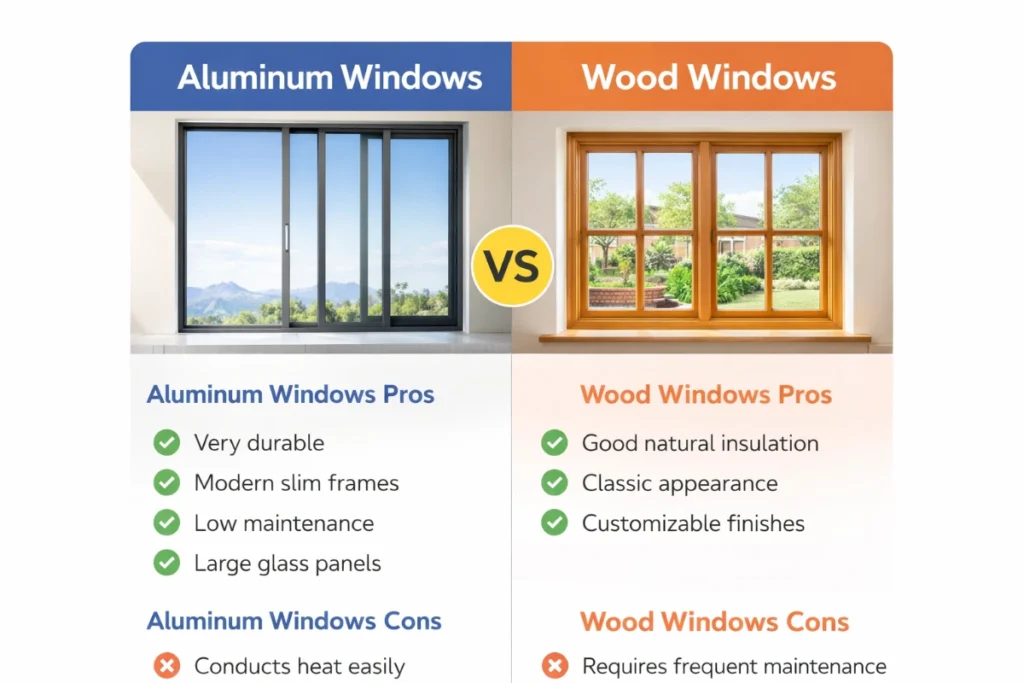
Aluminum Windows Pros
- very durable
- slim modern frames
- low maintenance
- suitable for large glass panels
Aluminum Windows Cons
- can conduct heat without thermal break
- less traditional appearance
Wood Windows Pros
- natural insulation
- classic appearance
- customizable finishes
Wood Windows Cons
- requires regular maintenance
- vulnerable to moisture damage
Aluminum vs uPVC vs Wooden Windows – Complete Comparison Guide